


How to choose wood grain press plate for flooring?
 Dec 23, 2025|
 View:811
Selecting the right wood grain press plate is one of the most critical decisions in the manufacturing of high-quality laminate, LVT, or engineered wood flooring. This choice directly impacts the aesthetic appeal, tactile quality, durability, and ultimately, the market competitiveness of your final product. A poorly chosen plate can lead to visual defects, production downtime, and increased costs, while the right plate ensures efficiency, consistency, and a premium finish.
This guide will walk you through the key considerations, from technical specifications to design philosophy, to empower you to make an informed decision.
1. Define Your Target Market and Aesthetic Goal
Before diving into technical details, start with the end in mind. The press plate must be a tool to achieve your desired product vision.
Premium vs. Value Segment: Are you producing high-end, authentic-replica flooring or more economical options? Premium lines demand greater texture depth and complexity.
Wood Species and Style: Is the design a classic oak, an exotic teak, or a rustic hand-scraped maple? Each species has a unique grain pattern, pore structure, and character. The press plate must accurately reflect this.
Finish Type: Are you aiming for a high-gloss, satin, or matte finish? The plate's surface texture will interact with light differently. A high-gloss finish requires an exceptionally smooth plate with minimal texture depth to reflect light evenly, while a matte finish can accommodate deeper, more pronounced textures.
2. Understand the Core Manufacturing Technologies
The method used to create the texture on the press plate is fundamental. The three primary technologies are:
a) Chemical Etching
Process: A photochemical process where a light-sensitive coating on the steel is exposed to a film negative of the wood grain design and then etched away with acid.
Best For: Highly detailed, realistic wood grain reproduction. It excels at creating the fine, shallow pores and micro-veining found in natural wood. It is generally more cost-effective for complex, all-over patterns.
Limitations: The achievable depth is shallower than CNC. The texture may wear down faster than CNC-engraved plates in high-volume production.
b) CNC Engraving
Process: A computer-controlled router physically cuts the wood grain pattern into the steel plate.
Best For: Deep, dramatic textures like hand-scraped, wire-brushed, or deep-brushed effects. It offers superior durability and longevity because the texture is cut from solid metal.
Limitations: Less effective at reproducing the finest, most delicate details of wood grain. It is typically more expensive, especially for large, intricate patterns.
c) The Hybrid Approach: CNC with Etching
Process: This is often the best solution for top-tier flooring. CNC is used first to create the macro-textures (e.g., the grooves of hand-scraping), and then chemical etching is applied over the entire surface to add the micro-details of the wood grain.
Result: Unmatched realism that combines the deep, three-dimensional feel of CNC with the authentic, fine detail of etching. This method creates a texture that looks and feels incredibly close to real wood.
Recommendation: For most modern, realistic wood grain flooring, the hybrid CNC + Etching plate offers the optimal balance of durability and authenticity.
3. The Critical Decision: Standard vs. Synchronized (Synchro) Embossing
This is perhaps the most important technical choice, with significant implications for both cost and quality.
Standard Embossing (Non-Synchronized):
How it works: The press plate has a random or repeating wood grain texture. During pressing, this texture is applied to the decorative paper regardless of the printed pattern underneath. The grain and the pattern are not aligned.
Pros: Lower cost for the press plate. Simpler production process.
Cons: The visual (printed pattern) and tactile (embossed texture) elements do not match. For example, a printed dark vein might be embossed with a light pore texture, breaking the illusion of realism.
Synchronized Embossing (Synchro, SRE - Synchronized Register Embossing):
How it works: The embossed texture on the press plate is perfectly aligned with the printed pattern on the decorative paper. Where the print shows a deep grain line, the plate embosses a matching groove. This requires precise registration during the printing and pressing stages.
Pros: Achieves the highest level of realism. The look and feel are perfectly united, greatly enhancing the perceived value of the flooring. It is a key selling point for premium products.
Cons: Significantly more expensive press plates due to the precise manufacturing process. Requires more sophisticated and controlled production equipment.
Recommendation: If you are competing in the medium to premium market, Synchronized Embossing is non-negotiable. It is the single most effective way to elevate your product above competitors using standard embossing.
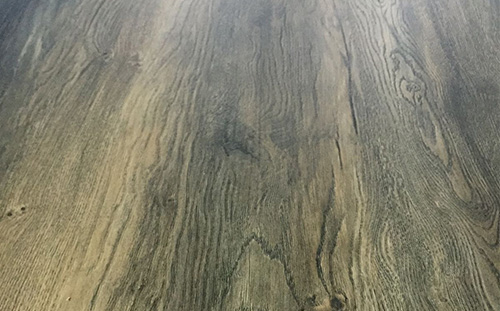
4. Evaluate Technical Specifications and Quality
Once you've settled on the technology and type, scrutinize the plate's physical properties.
Base Steel Material: The industry standard is Stainless Steel, typically Grade 420 or 304. Grade 420 offers better hardness and is preferred for its durability. Ensure the supplier uses high-quality, defect-free steel to prevent issues like pitting or premature wear.
Surface Hardness and Plating: The plate must be surface-hardened to withstand constant pressure and abrasion. Hard Chrome Plating is the universal standard.
Key Metric: Look for a Vickers Hardness (HV) of 800-1000 or higher.
Plating Thickness: A thickness of 10-25 microns is typical. Thicker plating generally extends service life but must be applied evenly to avoid filling in fine details.
Flatness: Absolute flatness is crucial. Any warping or unevenness in the plate will result in inconsistent pressure during pressing, leading to areas with poor texture transfer, gloss variations (known as "orange peel" effect), or even delamination. Reputable suppliers will guarantee a strict flatness tolerance (e.g., within 0.1mm over a 1m length).
Texture Depth: This should be chosen based on your aesthetic goal and technology.
Shallow Depth (e.g., 0.05-0.1mm): Ideal for high-gloss finishes and fine, delicate wood grains.
Medium to Deep Depth (e.g., 0.15-0.3mm): Used for standard matte/satin finishes and textured looks. Deep textures (>0.3mm) are achieved through CNC for rustic styles.
5. Partner with the Right Supplier
The manufacturer of your press plate is as important as the plate itself. Look for a partner, not just a vendor.
Experience and Expertise: Choose a supplier with a proven track record in the flooring industry. They will understand the unique challenges and requirements of your production process. Ask for case studies or client references.
Design and Customization Capability: Can they work from your digital designs, a physical wood sample, or even a concept? A good supplier has an in-house design team to help you create a unique, proprietary texture that sets your brand apart.
Quality Control Processes: Inquire about their QC procedures. How do they ensure flatness? How do they inspect the final texture? Do they provide quality certificates?
Technical Support: The best suppliers offer ongoing technical support. They can advise on pressing parameters (temperature, pressure, time) to optimize the performance of their plate with your specific resins and base materials.
To summarize, follow this checklist when choosing your wood grain press plate:
Define the Product: Premium or value? Which wood species and style?
Choose the Technology: For realism, select Hybrid (CNC + Etching). For deep, rustic textures, pure CNC may suffice.
Decide on Embossing Type: For a competitive advantage, invest in Synchronized (Synchro) Embossing.
Verify Technical Specs: Confirm Stainless Steel (420/304), Hard Chrome Plating (HV >800), and guaranteed Flatness.
Select a Reputable Partner: Choose a manufacturer with flooring industry experience, customization ability, and strong technical support.
By meticulously evaluating each of these factors, you can select a wood grain press plate that not only meets your production needs but also becomes a cornerstone for creating beautiful, durable, and highly marketable flooring products. The right investment here pays dividends throughout your product's life cycle.


View More(Total0)Comment lists